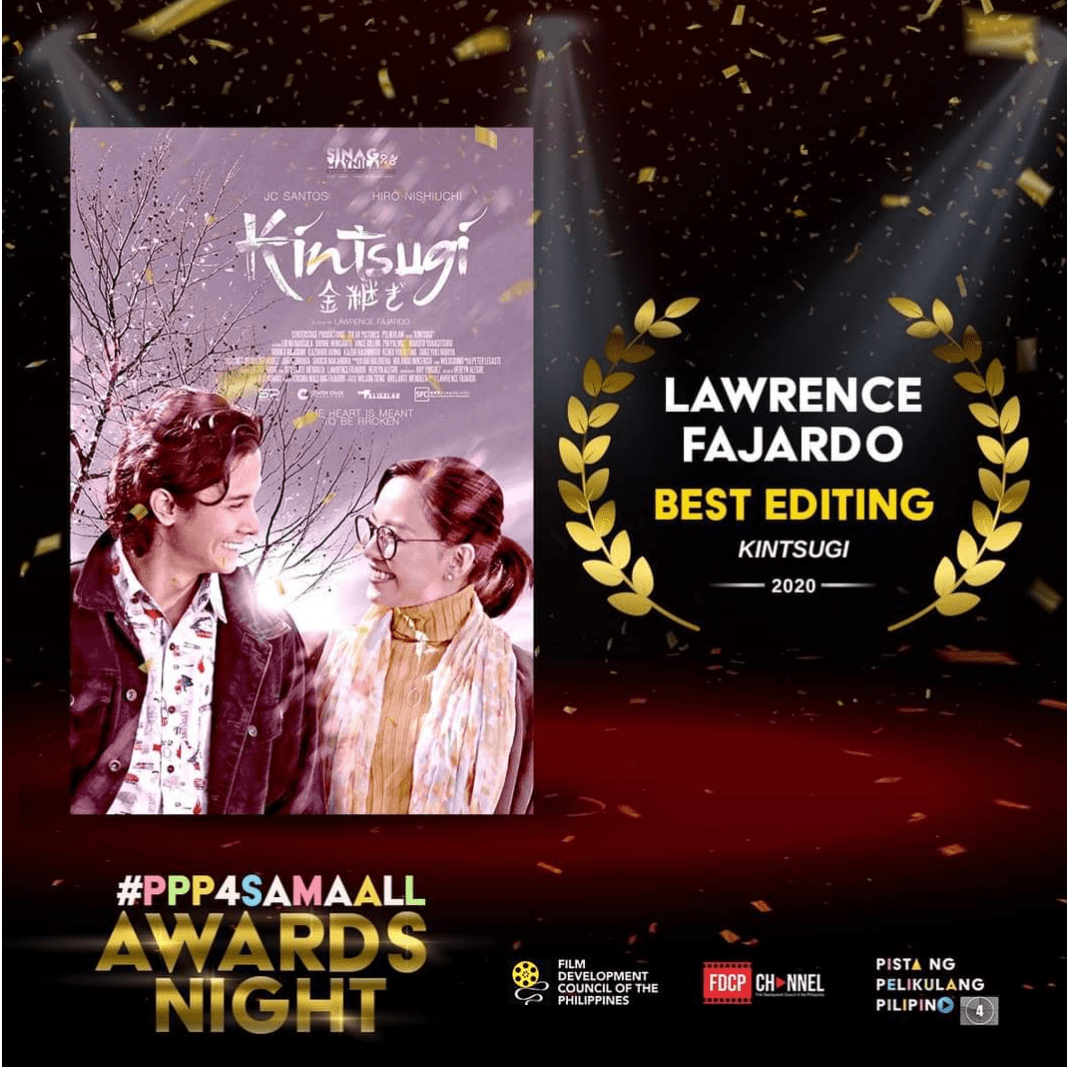
And certainly we wish to congratulate Law Fajardo’s Kintsugi (Broken) team for receiving Best Editing at the awards night; you deserve it and definitely the beautiful film by itself is a validation of the whole team’s efforts.
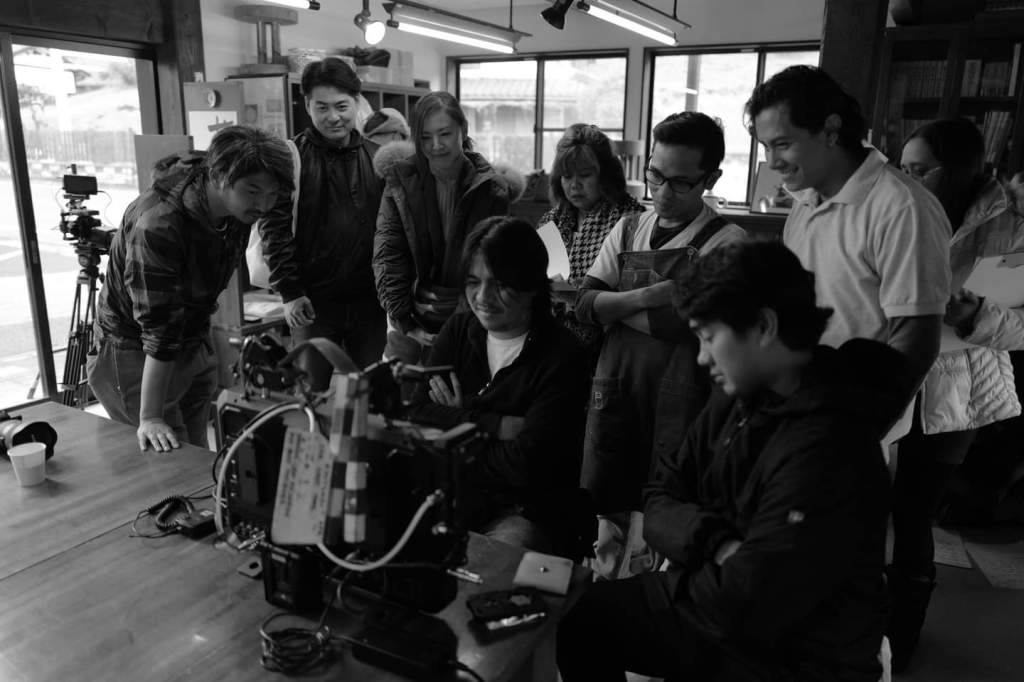
Kintsugi Team
The film, as expected, received mixed reviews— and perhaps in a world where people are always looking for the next viral, over-the-roof content, where the message often has to be bombarded into the audience’s consciousness through any means possible, there will be some who cannot see or appreciate the beauty in simplicity and subtlety. It is admittedly time-consuming to ponder and look deeper into what is offered before us, and it is easy enough for some self-styled critics, with their biases and personal contacts to please and promote, to dismiss other people’s hard work. Thankfully there are many others who pause to look closely and fairly at films such as Kintsugi, and give their verdict justly; they understood that Kintsugi is like that saying—-‘still waters run deep‘—there is a lot of passion beneath something that appears tranquil, and we commend Fajardo and his team for having a different vision and style and taking on the risks they knew it entailed.
Says Fajardo, “Congratulations to everyone behind the films screened at the Pista ng Pelikulang Pilipino! We hope that next year we get to see each other face to face, and enjoy these festivals—and our daily lives—more freely. We are sorely tested now but definitely we will be stronger.
To the Kintsugi Team, good job—it was worth it. We thank those who watched the film, please keep supporting Philippine filmmakers and Merry Christmas!”
As before, congratulations to all! Let us respect artistic differences and always aspire to create high-quality work.
Many of us did not expect that our lives would be changed in various ways by the crisis which has, so far, refused to leave our land—we are in different situations and the trials can be harder for others, we have lost friends and loved ones. Our people do not deserve this. Still, let us not lose hope; stay strong Filipinos!
After the uncertainties and the seemingly long postponements of film festivals around the world, we are glad to see that Law Fajardo’s Kintsugi(Broken) has also been included in this year’s Pista ng Pelikulang Pilipino which will be screened online through FDCP’s https://fdcpchannel.ph . Those who wish to see it may simply purchase Premium Festival Passes from the site. You may also visit https://m.facebook.com/fdcpppp for additional information.
Viewers may watch Kintsugi on these dates: NOVEMBER 28 – 4PM *There will also be a talkback 6-7:10 pm
DECEMBER 4 – 8PM
DECEMBER 7 -8PM
QUICK QUESTIONS : ‘KINTSUGI’ FEMALE LEAD HIRO NISHIUCHI
In filmmaking—in fact in all collective undertakings—we have often heard it said that there is no such thing as a small role, and this is very true; a role only seems small if the person who holds it does not value it, or work hard for it. Directors, writers, producers, production designers, sound recordists, cameramen, the ‘water-boys’—everybody needs the help of everybody. Actors have a great responsibility in filmmaking, and their performance will affect the outcome of the film; sometimes their name alone can guarantee success in the box office, but certainly we appreciate actors who take their craft seriously and do not rely on their appearance alone.
As our readers will notice, we do not make it a habit to publish actors’ interviews or Q and A’s—however famous or talented they may be— not because we do not value them enough, but because most of the limelight seem to focus on them; there are other publishers whose content centers on celebrities. For the first time we decided to feature an actress: Kintsugi‘s female lead, Hiro Nishiuchi. Perhaps the lady appears shy and humble, but we think she deserves more encouragement and recognition for her acting, considering it is her first time to work with Filipinos, and though her role (as Harue) did not require her to have overly-emotional scenes, we approve of her performance.
It will certainly not hurt to add that Ms. Nishiuchi is also one of Japan’s beauty queens and was designated as Philippine Tourism’s Fun Ambassador to Japan.
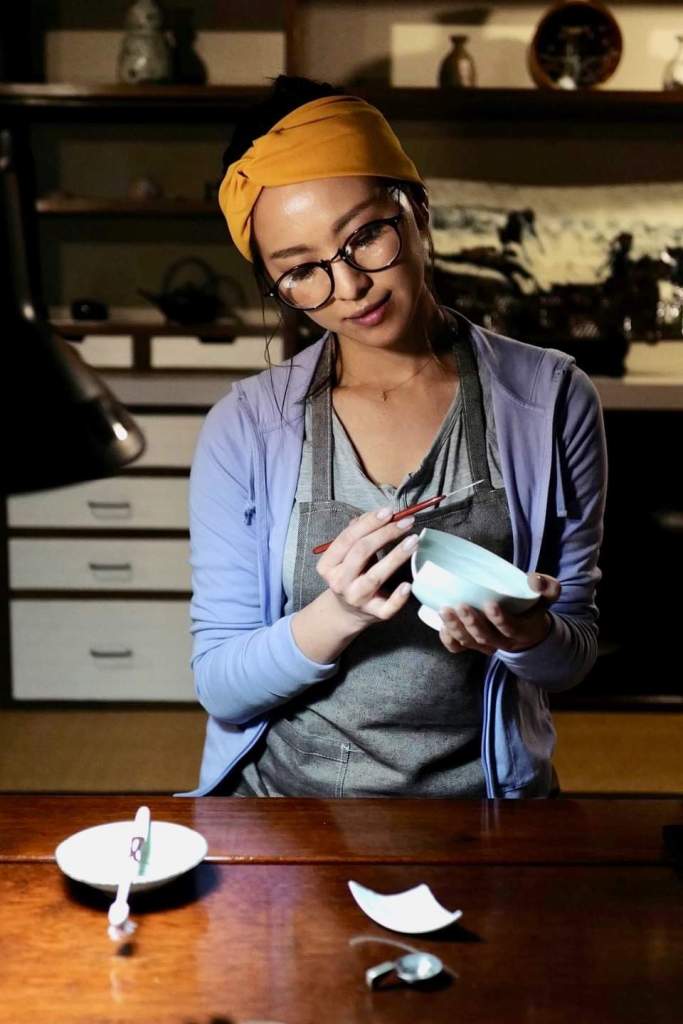
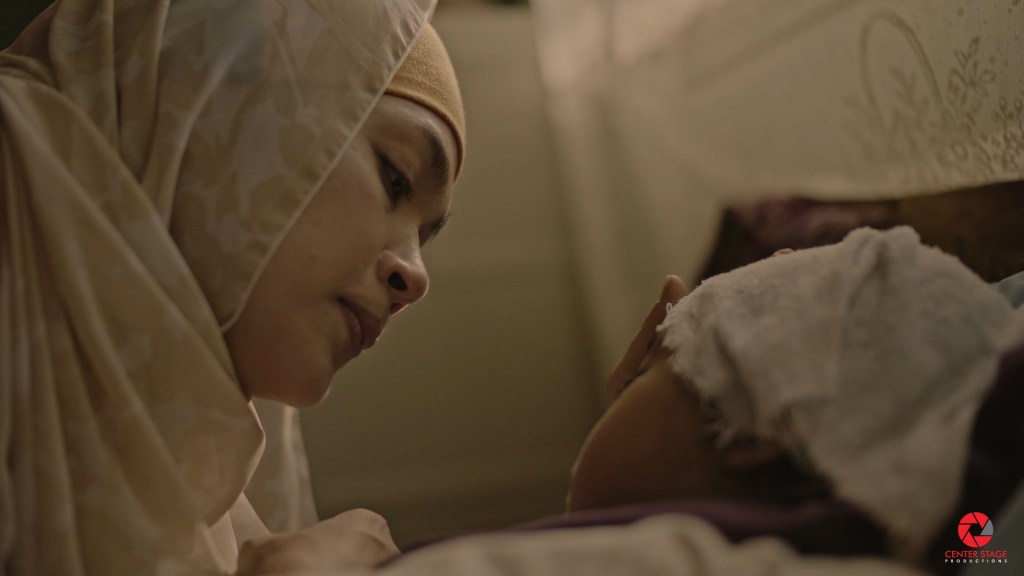
Hiro Nishiuchi as Harue in Law Fajardo’s ‘Kintsugi’
OPF : Was Kintsugi your first try at acting? From what we have seen we think you can be proud of yourself. How was the experience?
NISHIUCHI : Thank you very much! That was a nice thing to say. I’ve been acting for some time but Kintsugi was such a good experience because it was the first time I worked with foreigners.
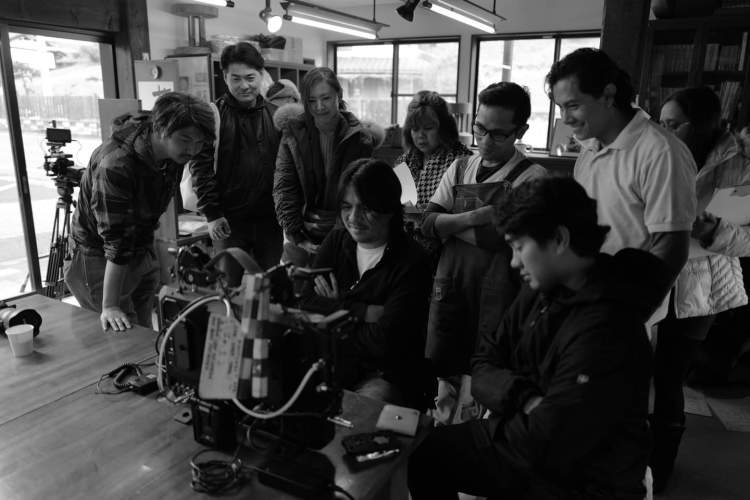
Japanese and Filipinos working—‘Kintsugi’ team, photo by Boy Yniguez
OPF : You worked with a Filipino team. What difficulties did you have?
NISHIUCHI : I was confused at times because of our cultural differences—for example, the fine nuances of words, and regarding the use of time. I was lucky to work with a good production team. Everyone was kind, so I enjoyed filming.
OPF : How did you prepare yourself for the role, what adjustments did you make? What do you think was your biggest challenge?
NISHIUCHI : I received the synopsis in advance, but my lines were only given on the spot in the shoot. But it was good and I played my role and acted naturally. The biggest challenge was working with foreign nationals for the movie—but it turned out to be a good experience!
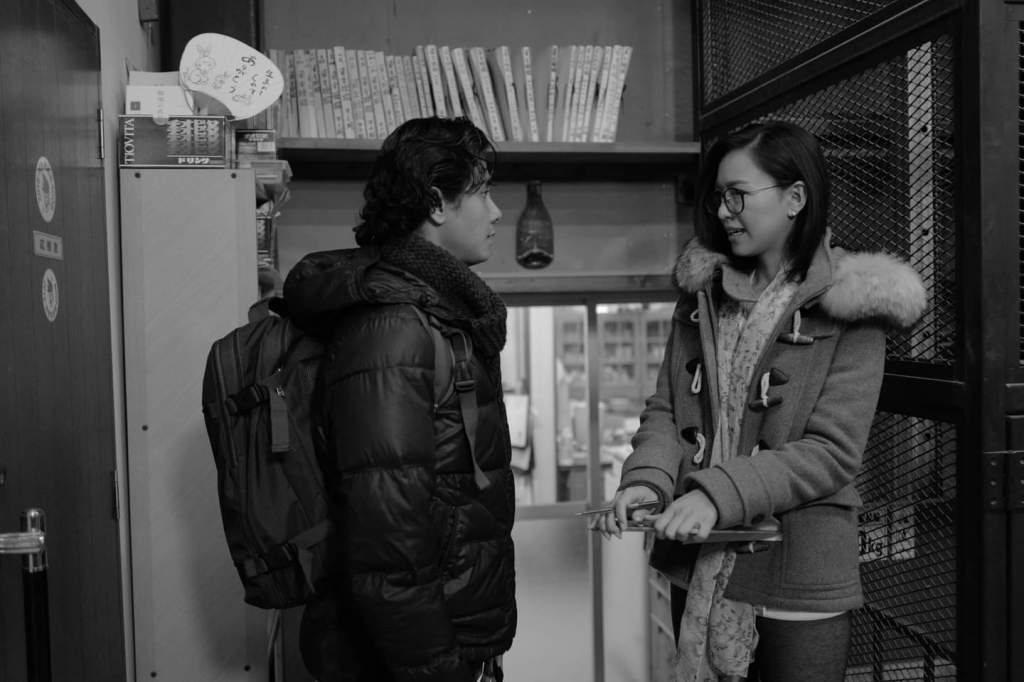
Hiro Nishiuchi in a scene with JC Santos, photo by Boy Yniguez
OPF : What can you say about your fellow actors, and JC Santos?
NISHIUCHI : JC actually learned his Japanese lines which were given to him in the shoot in ten minutes! He was kind and it was easy to work with him, same with the rest of the actors.
OPF : What did you learn in making the film?
NISHIUCHI : I thought Kintsugi was a profound thing. Like life, it can be repaired even if it breaks. It depends on what color you use or apply.
OPF : You are Philippine Tourism’s Fun Ambassador to Japan. Tell us about it.
NISHIUCHI : I visited various places in the Philippines. I went to Manila, Cebu, Iloilo, Palawan and Boracay and appeared in PR videos intended for the Japanese people; I appear at the Travel EXPO and talk about the good things in the Philippines, which I also do through interviews published in magazines.
Being the Fun Ambassador to Japan has also landed me on the pages of magazines such as Mega and Scene Zone, and it also gave me the opportunity to appear in the longest-running variety show in the Philippines “Bubble Gang” several times.
I also worked with the Ministry of the Environment and addressed international environmental issues. I also had a chance to work and shoot a PR campaign in Boracay Island when it was closed for renovation. I echoed my experience in Boracay to Japanese locals, and told them how the Philippine Government was exerting so much effort to rehabilitate the island.
OPF : Any message for our readers? Do invite them to watch the film.
NISHIUCHI : Our film Kintsugi was shot in Saga, Kyushu, which is also my hometown. I am very happy to show you the Japanese culture of Kintsugi.
Kintsugi is similar to our lives—even if we get hurt, it is important to accept the pain and make something good out of it.
Each person has his or her own life, but I hope you feel something when you see this movie. May your experience in life be better.
With this, I invite you to watch Kintsugi (Broken). Thank you!
Continuing with our featured film Kintsugi, we had the chance to interview its editor-director, one of the most recognized in the Philippines—Lawrence ‘Law’ Fajardo.
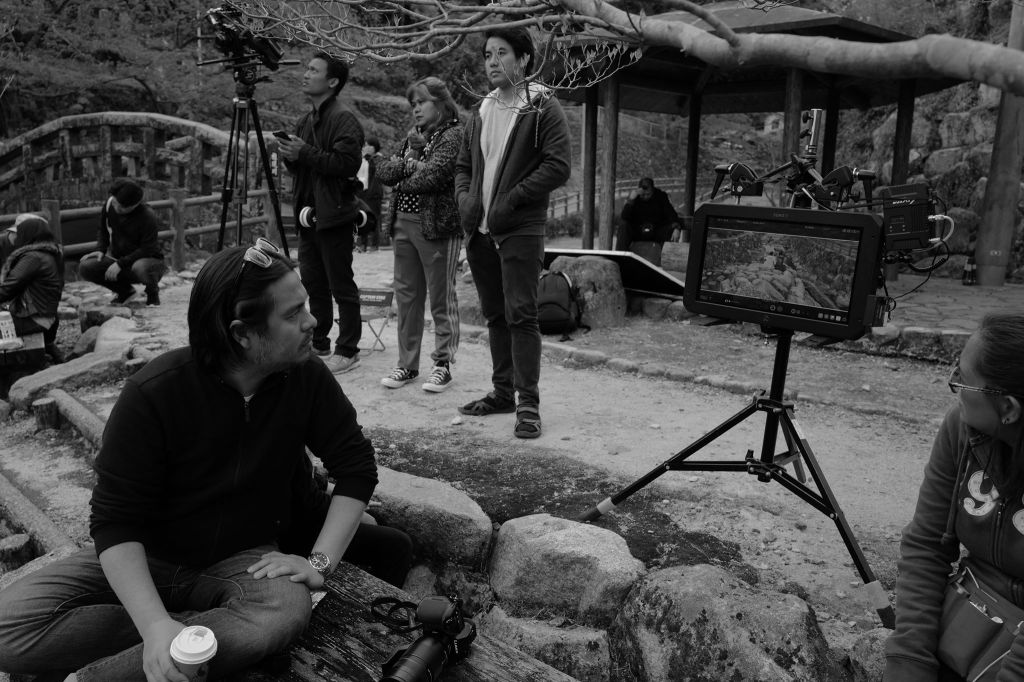
Law Fajardo on the set of Kintsugi, photo by Boy Yniguez
While we do not doubt that this man can handle any genre, as someone who is known for works such as Kultado, Amok, Imbisibol, all seemingly hard films—we ask his experience and thoughts in creating Kintsugi, a love story.
OPF: The tough parts first: what challenges did you encounter in creating Kintsugi?
Fajardo: For me at least, I realized that making a film about love or romance is not that easy—it is not just a job you have to finish, you have to genuinely fall in love with the characters, root for their relationship, their love story. This is my first attempt for the genre—I thought this would be really easy to do… but boy, the love story genre is complex.
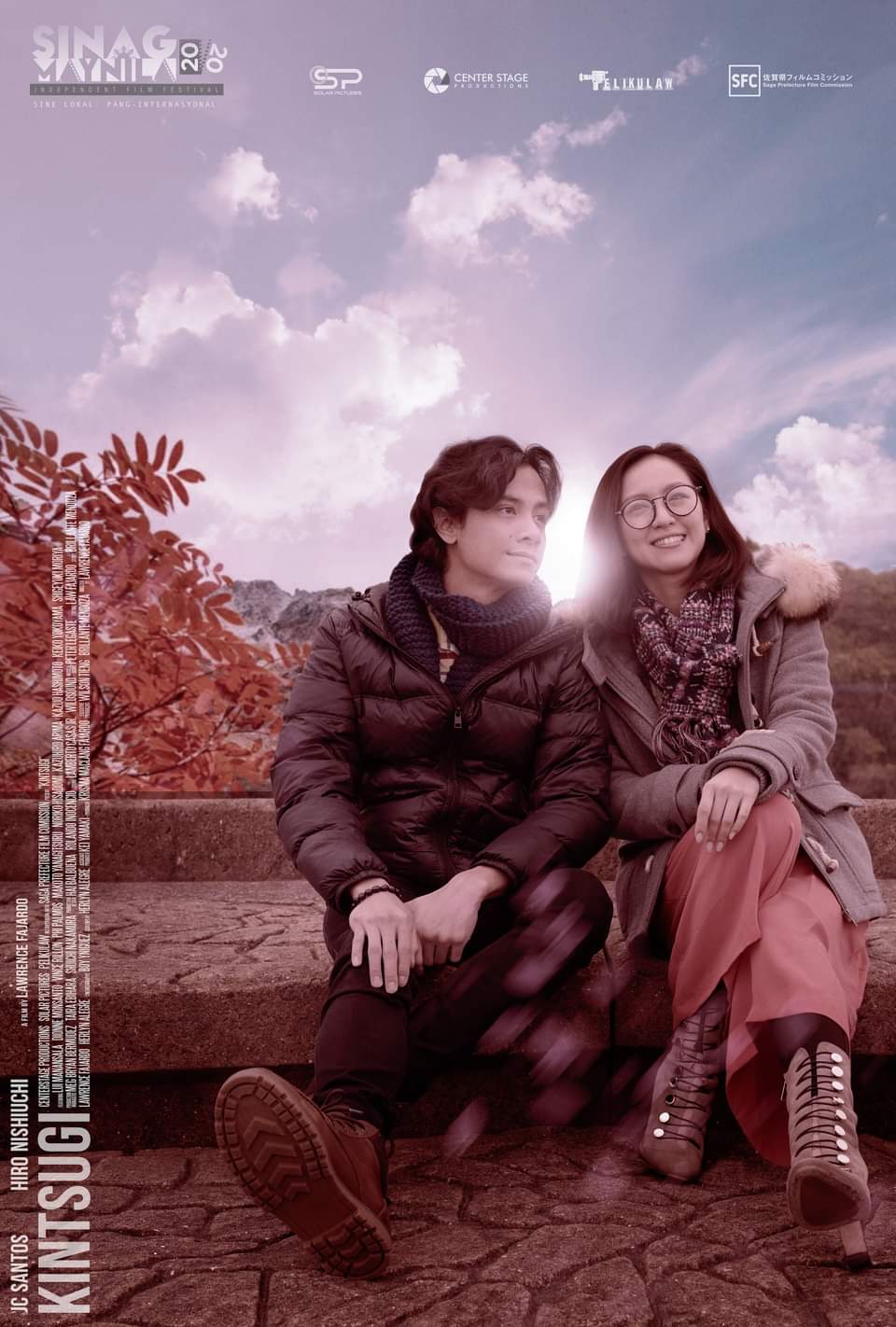
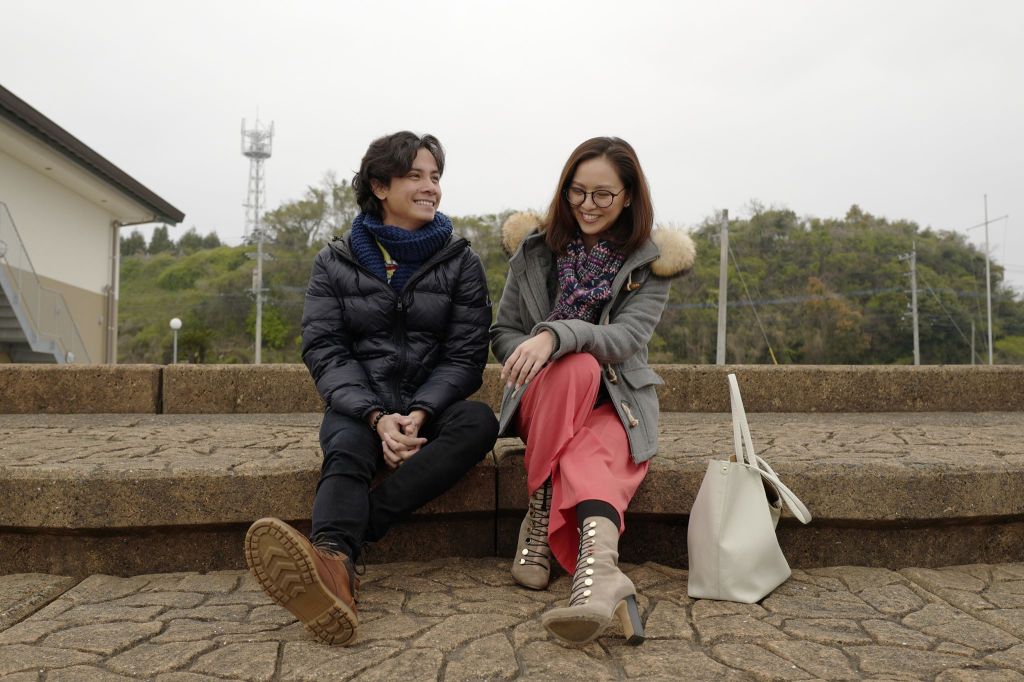
JC Santos and Hiro Nishiuchi, photo by Boy Yniguez
OPF: How about the casting? Considering that they come from two different cultures, how were the performances of lead characters JC Santos and Hiro Nishiuchi?
Fajardo: That is another thing, because it is like ‘abstract’ casting—at first there is that tiny worry in your mind because you don’t know what actors will be given to you, there is no certainty if there will be a spark or magic between the two when they come together as a couple in the film, and that is something the audience can see and feel. They may have great personalities or possess fine acting skills, but they might not look convincing together—the result may be pleasing enough, but believability is very important in making a film.
In our case we were blessed that we got JC Santos and Hiro Nishiuchi—we knew that we had JC Santos as the lead guy but finding the love interest would be challenging for us, because you don’t often find two lead actors who can appreciate and compliment each other physically and mentally…when Hiro auditioned for the role, she was the last girl who auditioned— although I first met her via video call, that was her first audition. She did well even though it was her first film.
They made a pretty couple—JC is handsome, Hiro is beautiful, and there are moments when you think they’re too pretty—we had to remedy that, it was quite a problem… but kidding aside, again, we have to always consider the issue of believability.
You cannot fake a scene, fake an emotion, that you are falling in love with your co- actor. If we want to be as pure as possible, a man and a woman who love each other is difficult to re-create in a movie, since the the usual tendency of the actors and the director is to stage it, set it in a beautiful place to set the mood. We dressed them with posh clothes and gave them dialogues that would be believable for the character to fall in love. We show the audience that these couple are complimenting each other, but there are times that they did not compliment as well as we wanted, that happens sometimes—consciously or unconsciously maybe,they tend to ‘act’ the way they’ve been trained, and I guess that is the biggest challenge, but of course that is because we don’t want it to be just like any other love film, so we worked on it. This also makes you understand that subtlety is hard to achieve, especially in a genre that usually require high emotions or passionate scenes.
OPF: Tell us more about the story.
Fajardo: There is nothing new in this kind of movie, boy meets girl, girl meets boy, it has been told a million times. We have also seen a lot of diaspora films before. I think the question is what you can add to that type of story; we need something that hasn’t been done for the genre. So we challenge ourselves in the process of realizing the movie.
The setting is in Japan, and many films have been made about Japan already— but kintsugi, that was new to me. I knew nothing about wabi sabi or kintsugi before, so this sparked my interest.
Each film we make, we take it seriously but this film had something that made it very special—in return it ended up teaching me. It was a delight to learn about the craft of kintsugi, learning and reading about the whole essence and the true value of the craft. I hope, when the audience gets the chance to see the film— that it would open up to them a deeper meaning to life—right or wrong there are choices we willingly make and situations that fate simply hands us, and we end up scarred, torn, imperfect, and we have to learn how to accept it—to move on, to be healed by time and to look forward to what the future would be offering to you.
Kintsugi writer Herlyn Alegre and Law Fajardo, photo by Boy Yniguez
OPF: How was the process of creating the story/ screenplay with its writer, Herlyn Alegre?
Fajardo: We really didn’t know where to go exactly at first. Herlyn and I explored a lot of possibilities. In short a lot of what ifs… the big question is how to properly represent Japan— the place and the characters involved in the place. Saga is known for pottery, so we needed a simple love story that involves pottery.
I wanted to tell a romantic drama based on the reality of the characters. A craftsman and a teacher. A Filipino craftsman in love with a Japanese teacher. There are lots of questions and logical inquiries about how to court a Japanese lady. What do you do when you fall for them? How do you know their taste, their preferences? Is social status, the nationality important? Because all these inquiries are important to the whole aspect of falling in love. If we don’t fall in love with and believe the characters, then it will fail.
We had to clarify the relationship of the subject and the object.We looked at Japan’s customs and traditions, where we can find the film’s conflict. We looked for Filipino stories and experiences, which would be the drama of the film. We looked at the nature of human beings— by their needs and wants—that would be the fight between good and evil and desire for perfection. We looked at the behaviour and relationships between Japanese and Filipinos—that would be the love story of the film. So that is how the story came about.. we went back to nature, and nature gave us the answer. I think we seek for perfection but nature will always suggest where our true destiny will be.. we fail and we recover—then we change ourselves for the better, a new direction, a new purpose.
Stay safe! Support good Filipino films! Kintsugi will have its premiere at the coming Sinag Maynila. Here is the trailer:
We did not expect to be so busy that a whole month passed and we did not get to post something new for you, our dear readers.
And what with the unslappable COVID 19 entering the Philippines, it cannot be avoided that gatherings must be postponed, including film festivals such as the new Summer Metro Manila Film Festival and Sinag Maynila.
Today we shall feature one of this year’s entries for Sinag Maynila: Kintsugi, directed by Lawrence Fajardo and written by Herlyn Alegre.
Director Lawrence Fajardo
Mostly set in Saga, Japan and some parts shot in Pampanga, the film revolves around Dante, a Filipino worker in Japan (played by JC Santos) and Harue (played by Hiro Nishiuchi), a Japanese woman who is a practitioner of kintsugi and the daughter of Dante’s employer. While the film is about love, the drama is vastly different from the common lovers’ anguish and mush; it also gives a glimpse into the lives of Filipino overseas workers, the cultural differences and the art and industry of pottery.
For context or to get a better grasp of what the film is about, according to Wikipedia, kintsugi is the Japanese art of repairing broken pottery by mending the areas of breakage with lacquer dusted or mixed with powdered gold, silver, or platinum, a method similar to the maki-e technique. As a philosophy, it treats breakage and repair as part of the history of an object, rather than something to disguise.
The film also shows how people and things can be broken, repeatedly, and how one can be repaired, piece by piece—with patience. Most of try to hide our past wounds, our imperfections, but the truth is our scars are part of who we are, and even upon healing or mending, the marks will remain—but the experience, and the fact that we were able to endure and recover, the result of our breaking—these make us more valuable.
Editing ‘Kintsugi’
We were fortunate enough to see the film still in the editing process, and even in that unfinished state we thought it safe to say that it is a good film and we were not wrong, for as of this writing we have also seen the final version. The locations are without a doubt beautiful and well-chosen, the story is believable. For someone who has directed films like Imbisibol (Invisible), Amok, and his entry to the Summer Metro Manila Film Festival, A Hard Day—Fajardo’s very delicate handling of Kintsugi is highly commendable.
We do not think it wise to divulge any special part from the film, therefore we shall refrain from doing so, but let it suffice that while this film may not have the type of action that would thrill the viewer— as is expected from a Law Fajardo film— it packs enough punch to break your heart.
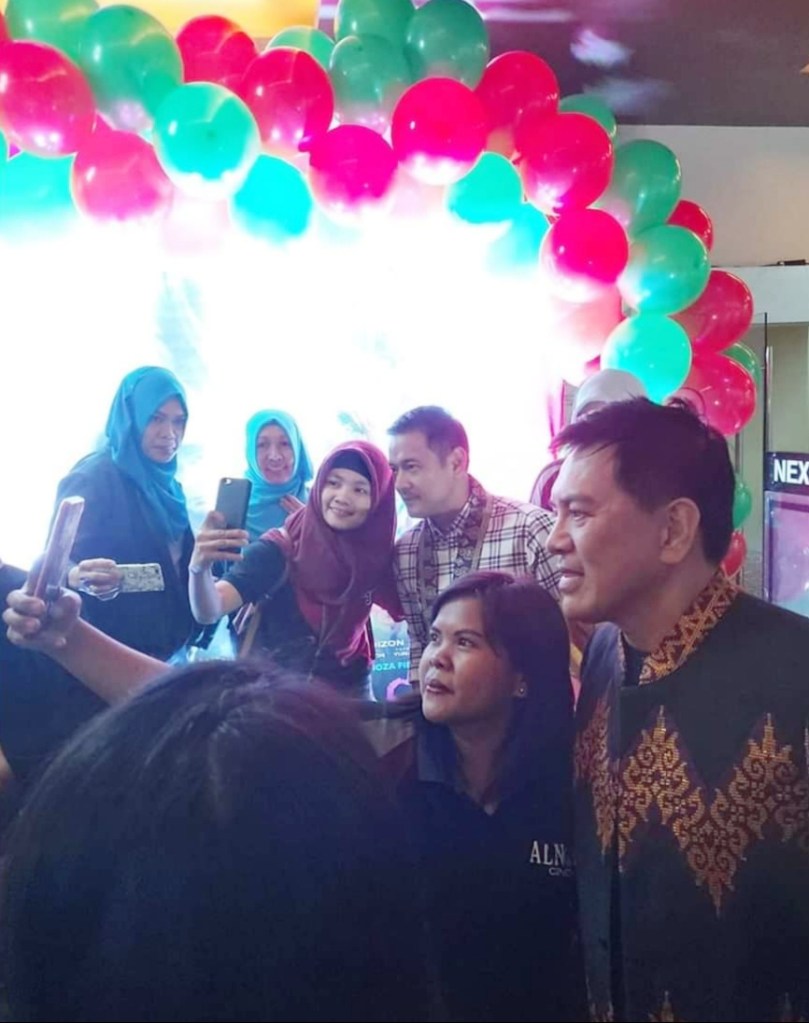
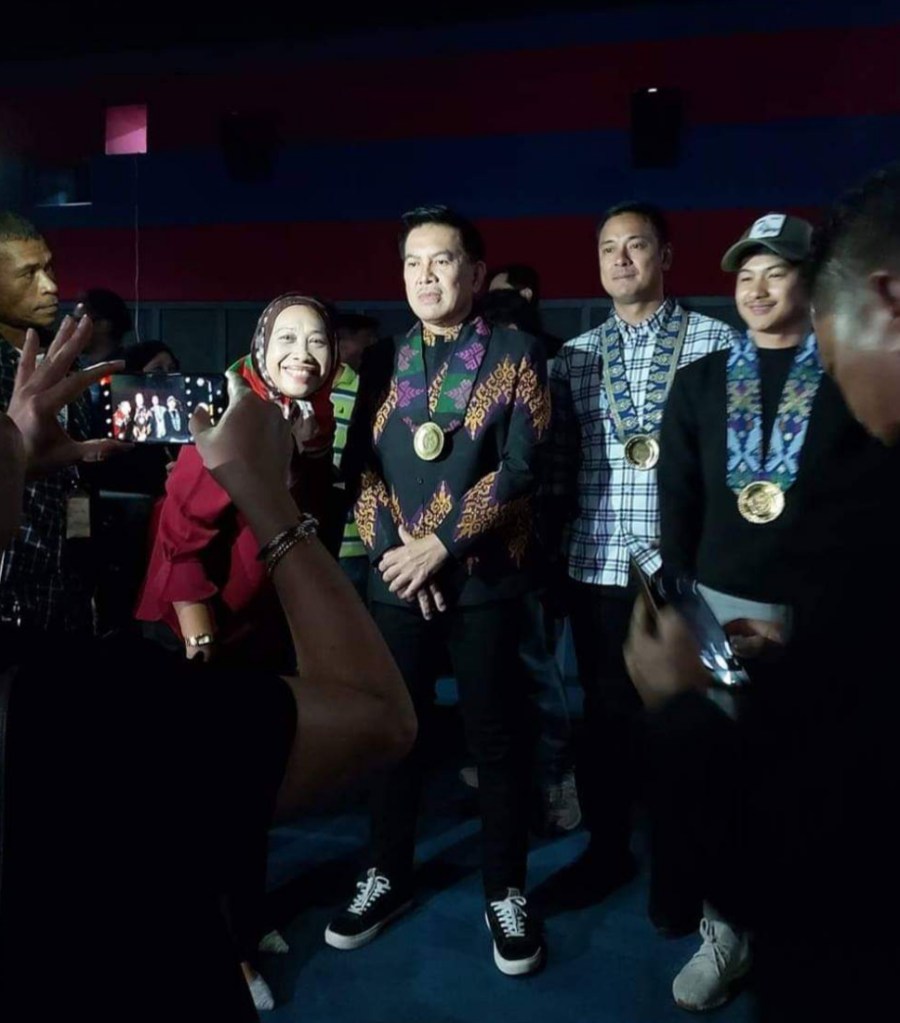
Cotabato City and the good Maguindanaons certainly know how to welcome their guests as they have shown when internationally-acclaimed director Brillante Mendoza brought his film ‘Mindanao’ last January 7 to AlNor Cinema for its red carpet premiere in the Bangsamoro region.
This is what happens when people open their hearts to a good message and choose to understand, therefore encouraging fair dialogue on issues—which is the intention of the film Mindanao.
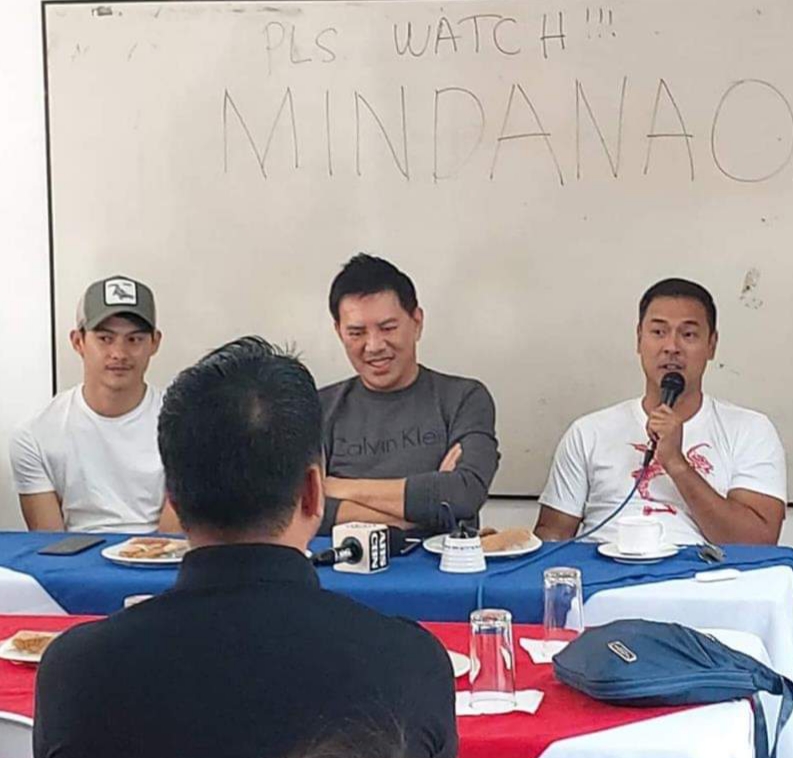
Together with Vince Rillon and international film festival veteran and multi-awarded actor—MMFF 2019’s Best Actor—Allen Dizon, Mendoza was treated to a lavish lunch which they enjoyed and also had a very simple press conference at Cafe Mindanaw.
Presscon at Cafe Mindanaw
They were also interviewed by Ms. Nikki ‘The Monster’ in the studio of 92.7 Happy FM Cotabato where Brillante Mendoza gamely and easily answered all the questions and clarified matters especially the issues that critics have raised about the film.
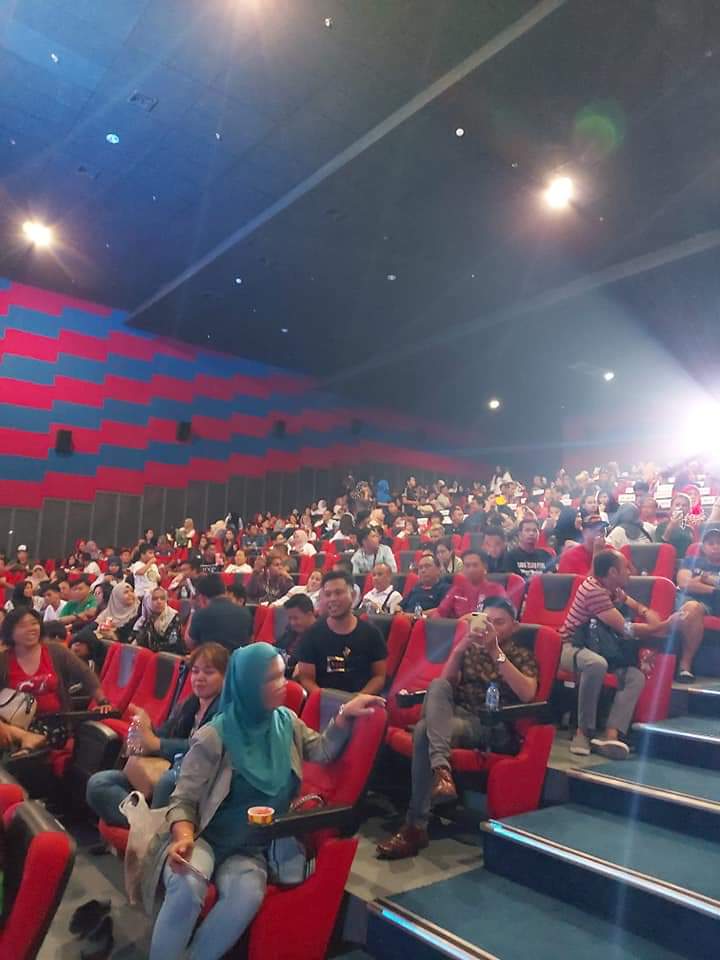
At 7 pm they proceeded to the red carpet screening, where the audience cheerfully received them. The event was presented by the government of Cotabato City, Anak Mindanao Partylist, and also graced by the presence of the good LGU officials such as the Mayor of Datu Odin Sinsuat Maguindanao, Cheryl Mary Rose Ann Lu Sinsuat, BARMM Assistant Secretary of Tourism Bai Shalimar Candao, OIC City Treasurer of Cotabato City Mr. Teddy Inta.
It was also graced by the kind Bai Annisa Alonto Biruar—Royal Ladies of Lanao; Datu Manny Balabaran—Board of Trustees NDU Alumni Association; Ms. Conching Mistral—President of Metro Cotabato Chamber; Atty. Jamar Kulayan; Architect Marlo Basco of AlNor Complex and Ms. Fatima Kanakan, NCCA Representative for Indigenous Tribe; Cotabato City Media Groups, BARMM Employees Group and Cotabato City Bankers Group.
Screening of Mindanao in AlNor
Even before this screening, Mendoza already had a fondness for the city and the Maguindanaons, having visited the area previously. We were able to interview him about it.
OPF: Congratulations on your film. How does it feel that the people received it so warmly?
Mendoza: Icannot name all of them but I want them to know that I am thankful to all those who made this happen—those who invited us, those who came to watch and supported us. Sukran! I have to say, I never once doubted the kindness and the civility of the Cotabateños and the people of Maguindanao, because I have travelled there before, and they treated us well. I never forget those who receive us kindly.I appreciate them more than ever.
OPF: How was your previous visit to Cotabato/Maguindanao?
Mendoza: You know I just smile when some angrilysaythat I do not know its geography because they are so wrong. We don’t announce what we do but we’ve travelled around, in fact we’re familiar with AlNor because my people have stayed there…the streets, the tricycles ..we ate pastil and drank coffee at the newer market—because unfortunately the older one got burned. That really made me sad. A lot of our wardrobe, we bought it here.We visited the Pink Mosque, the Golden Mosque, we bought bananas to feed the monkeys who live near that old tree which has its own story. We watched the traditional dances and heard them play their musical instruments at the back of the (B)ARMM building, it was admirable although I was told the ‘village’ was taken down later (as they only display that at a certain time). I value those things. I tell people, we should treasure and protect these places, and tell their stories too. I wish I could do more for them.
OPF: What is your message to the audience who will watch in Cotabato and those in Mindanao?
Mendoza: We always say, that depending on who’s watching, the film may not be perfect— and the film I made is still a piece of the whole, for two hours is not enough to cover all the stories of Mindanao—but we’ll get there, step by step. What we are trying to do—and have accomplished—is putting Mindanao up there—on the world’s spotlight—so they will know that Mindanao is about people supporting each other, people who aspire for peace, people who know how to love, mourn, and laugh; people who bear burdens just like the rest of us—mothers and fathers tenderly raising their children, children who need our care, Moro and non Moro soldiers who fight against evil, people who serve the nation—that whatever difference we may have there is so much beauty and love we can find in Mindanao.
There is so much in Mindanao, stories that must be told, the stories of the Maranao, the Tausug, the Yakan, the Sama and the rest…that is why I support Mindanaoan filmmakers and hope they’ll be up there too to tell their own stories because they know their details better.Like I said, we’ll get there.What we have done through this film—this is just the beginning; we’re just opening a door.In everything, our goal is towards peace.
OPF: What do you think of your critics?
Mendoza: Should I? (Laughs) Well first, criticism is important, that will help in your growth, and as long as it is fair and helpful, we listen and think of it; on my part I am a director. It is not my way to sit about criticizing other filmmakers’ works because if I dowe’ll certainly find so many holes but there is no honor in that. It is wrong to elevate ourselves—make a name—- by dragging somebody down out of envy or politics. That’s how little minds work. I listen to criticism, I tolerate even the harshest words but I do not honor those who have malice and show ill manners. Me, when I have a concern I’d rather directly message them, write, call or talk to them face to face, compared to those who’d rather be noisy online or spread gossip. I thank God I reached this place without having to resort to low things. I prefer to work and give glory to the country, at the same time awakening people around the world about issues with relevance.
OPF: Your message to those who will read this?
Wherever you may have been born, rich or poor—let us unite and work for peace in our own ways, whatever your field may be, however small you may be in society. All these kind actions will have a good result—you may not see it today, but it will have its effect in the future. Thank you for supporting Mindanao.Thank you for your kindness. That is what matters.
Well, we think that the film Mindanao is a success, and with its local and international awards and more than a hundred cinemas that showed it, a lot of good reviews it will be very difficult to dispute that.
Good luck to your future works! Guess which filmmaker we will feature next?
***The red carpet screening of Mindanao was also presented by Revita Wellness Team in collaboration with NDBC, Fitnessity Gym, NDU Alumni Association.
**We accept correction and more details for the article provided it is given in a very polite, tender, and even romantic manner.
“Why isn’t ‘Mindanao’ being shown in more cinemas?”
This is the constant question we see about the film Mindanao.
Even after its warm acceptance and the prestigious recognitions it has received in the hard-to-get-into A-list international film festivals, even after its recent awards haul at the Metro Manila Film Festival, the film Mindanao continues to fight the good fight at the box office. The film that made viewers around the world cry and recognize Mindanao is struggling in its own home.
There was even a ridiculous and illogical post that Mendoza, the Mindanao’s director is worried about showing it in Mindanao, but to those who do not know, that is not the ‘simple’ reason for it—that is not how Metro Manila Film Festival works.
Apparently this problem regarding the non-showing of the film in theaters isn’t just in Mindanao but all over the country’s cinemas, and we do not need to look hard at the numbers to know how difficult Mindanao‘s fight is—trials that many cash-strapped independent films go through, year after year.
Thankfully, while some malls pulled Mindanao out of their cinemas in favor of films that guarantee them more profit, others took Mindanao in, but one cannot be complacent about it, after all, business is business and we can understand this; but we hope that as time goes on those who have the power to make good changes about these matters will act about it.
It is a given that not everyone can understand indie-type films, it will take time—but let us support what is good and true.
Happy New Year! Here is the current list of cinemas showing Mindanao:
When we first thought of creating this blog we said, we shall talk of issues big and small about the film industry and the Philippine filmmakers. We shall try to tell the truth without ruining anybody’s name, and avoid the shallow gossip and not focus on the negatives.
Our by-line is One film/filmmaker at a time.
But the negatives in the whole industry must be addressed, and this must change. There are many things that go on behind the scenes that many people are not too aware of. There is toxicity that must be eradicated.
There are those who do not properly pay their crew—the production design people, the soundmen, those who cannot easily voice out their complaints in public—while the higher up people can waste so much money on themselves.
There are those who, not having produced an excellent film, will spread lies and even use trolls to drag down a better film—a better film perhaps created by better people who do not spend time and money to fight back and drag others down and yet consistently succeed.
There are those who, in shameless envy, like to sow discord—lambast a great work which they themselves cannot and are not talented enough to create—those who want to appear like they are the fount of all truth to control and retain their little datu status in their area and yet have works that resemble that of a highschool student’s; all these people do is whine about the things they do not have and are likely too lazy to work for, and nitpick and mislead the few who listen to them while they themselves cannot produce anything that bring glory to their country, films that can actually unite and move people to action.
There are those who prefer to enmesh everything with politics. Anything to divide, because as the saying goes, divide to conquer.
We all appreciate differently, but envy and rudeness, especially on social media are behaviours that only reveal one’s lack of manners, intelligence and self-respect. It shows that you are not a true artist, a good creator because real creators have good souls. Creators create with their minds and hearts and hands–not by their nagging mouths or by posting crude, deceitful words online. There is a difference between being innocently wrong and being maliciously evil.
Let us use our knowledge for the good; remember the grace, the fine manners and the quiet nobility our forefathers had. Instead of destroying and spreading lies and poison, let us lift each other up. New Year has come. Let us be better than we are now.
Let us create wonderful things that have value and can last.
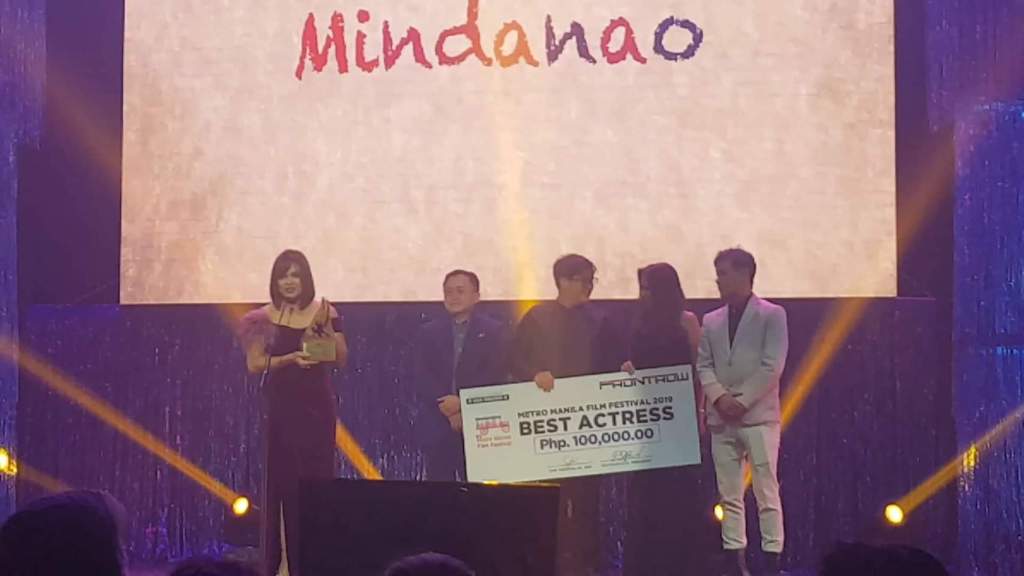
Judy Ann Santos receiving her Best Actress award, photo by BT
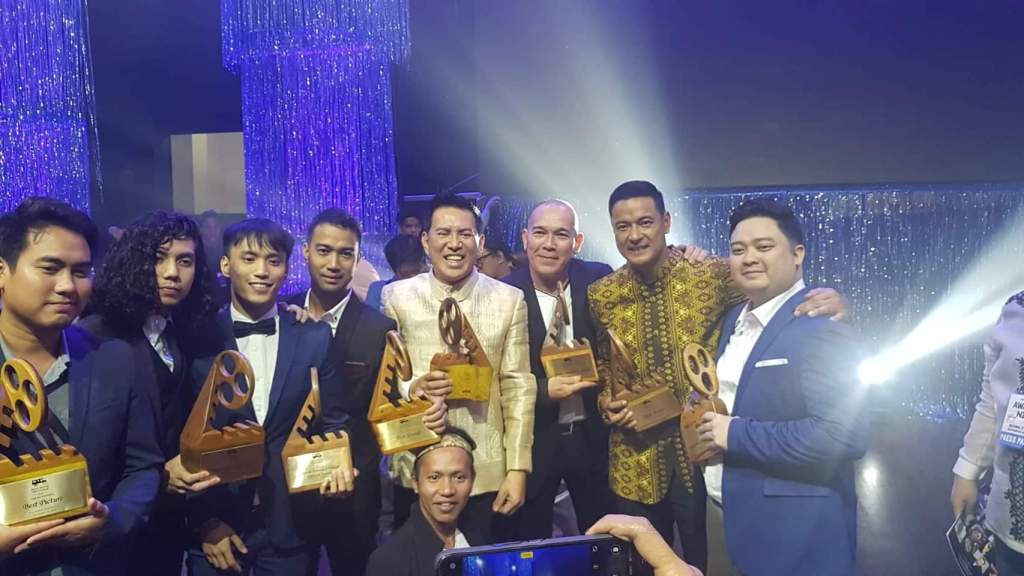
It was a difficult struggle, but it is always heartwarming to see the deserving underdog triumph as the film Mindanao did at the 45th Metro Manila Film Festival Awards night last December 27 at the New Frontier Theater in Quezon City.
Team Mindanao hauled these 11 awards:
Best Float
Gender Sensitivity Award
Best Child Performer-Yuna Tangog
Best Sound- Hiroyuki Ishizaka
Best Visual Effects-Team App
Gatpuno Antonio J. Villegas Cultural Award
FPJ Memorial Award for Excellence
Best Director- Brillante Mendoza
Best Picture
Best Actor- Allen Dizon
Best Actress- Judy Ann Santos-Agoncillo
Upon receiving the awards, the requests made by Mendoza, Dizon and Judy Ann Santos were the same and very reasonable—More cinemas for Mindanao!
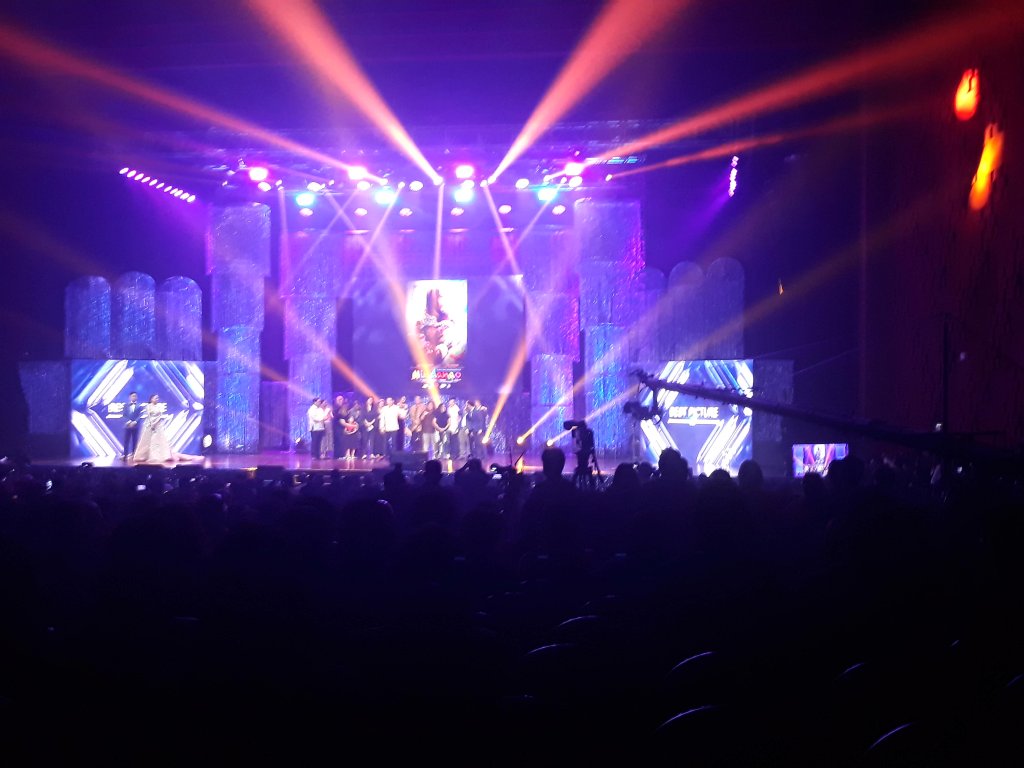
Team Mindanao accepting the Best Picture award
While its fate at the box office as an indie film is quite unsurprising—what with its very limited budget, non reliance on traditional and expensive marketing or promotion, having no huge, noticeable billboard placements or television advertisement—still, there is nothing to be ashamed of, and in fact, Team Mindanao has everything to be proud of. Creators create, and let this not dishearten them or those who desire to take the same path and emulate the good things they have done.
International and local awards are something one can be grateful and be happy about— reaching audiences, touching hearts worldwide and achieving unforgettable victories for the Philippines and its film industry are great ways to end the year— but we can only wish that more cinemas would show and retain Mindanao, and that the process and those in position would consider and be more fair regarding films such as these.
Write About Love and horror film Sunod also received a good number of awards.
Write About Love
-Best Musical Score
-Best Original Song
-Best Editing
-Best Editor
-Best Supporting Actor
-Best Supporting Actress
-Special Jury Prize for Full Length Film
-2nd Best Picture
Sunod
-Best Production Design
-Best Cinematography
-3rd Best Picture
We urge you to watch the films in this year’s MMFF, and to support independent films like Mindanao even though many malls do not show it in their cinemas.
Part of Mindanao’s earnings will be donated to the Kythe Foundation.
Spread kindness around you and be true. Happy New Year!
It was by accident that we happened to get into the film industry, and we saw how so many of its stories remain unnoticed—from the forming of the ideas, the scriptwriting, the meetings, the preparation, the production, directing, the editing and so much more; thus having been placed in a position to see these things, we saw the need to tell you about it—perhaps you’d like to know.
It may be that all our efforts will go nowhere, or these posts might reach too few an audience, but dear Reader, even if you are just one, with your support that will certainly spur us on, we will do what we can to write and show you more about the Philippine film industry and its filmmakers.
‘Yes, this is an emotional film and can be difficult to watch at times, but it’s uplifting too and Mindanao is a destination worth taking.‘
–Liisi Rohumäe
Perhaps, compared to others, Brillante Mendoza’s Mindanao may seem like a film that is not very easy to watch, especially this Christmas season. One may be led to think that—by the title and the photo of Allen Dizon in military uniform brandishing a gun—it will be a film focused on violence, war and all it entails, which may not be proper for the festive occasion. However, Mindanao has both light and depth; it will prove to be a fine choice should one decide to watch it.
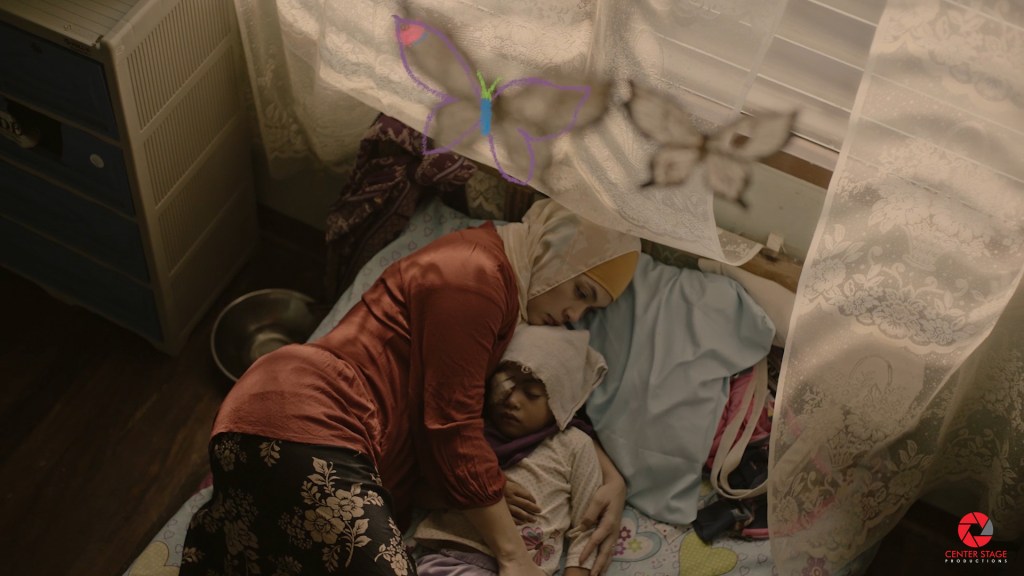
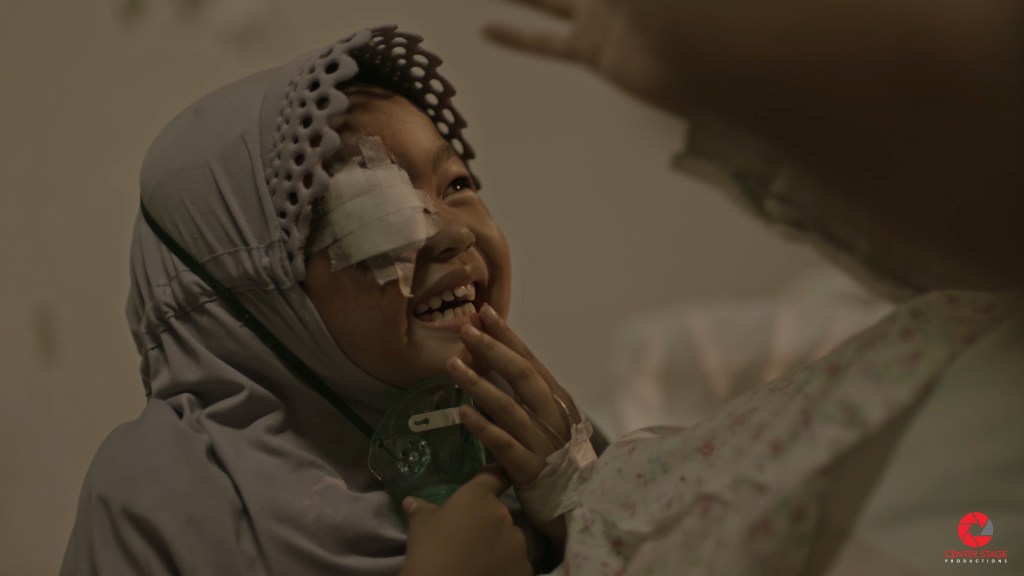
The story of Mindanao revolves around a Muslim family—of Saima (played by Judy Ann Santos) who must strive to keep her cancer-stricken daughter alive while her husband, Malang Datupalo (Allen Dizon) works as a combat medic in anti-terrorism missions that take him around Mindanao.
The main thing you can say about the film Mindanao is that it is a film with a serious purpose. It is our opinion–and the opinion of many others who took the time to watch the film, whether locally or internationally, that Mindanao is worth one’s time, and here are some of the reasons we considered:
-Mindanao has a very positive message: that wherever we may live, whatever our difference we are one; that we laugh, we cry, we suffer and we hope for we are human beings, who are capable of so much kindness; that we can help each other, and make decisions to act in order to cure the ills of our nation—and there are so many great things we can do if we only focus our resources and energies for peace.
-It is good for the children, for the film has absorbing animation that is based on the legend of Rajah Indarapatra and Rajah Sulayman, two warrior-brothers who saved Mindanao from ravaging dragons. It uses Maguindanaon dialect.
-Mindanao educates; it aims to show the side of Mindanao that very often most do not see in the news; its culture and traditions, its languages and stories.
-It is a tribute to all who sacrifice and serve the nation, whatever religion or whatever position they may have in life.
– Mindanao wishes to further raise awareness about child cancer, and the support the children and their parents/carers need; it is created in partnership with Kythe Foundation, and the House of Hope in Davao.
-It highlights the goodness of people; it does not rely on loud verbal quarrels or evil villains but teaches Filipino values.
-It shows the importance of love and the effects of our decisions—for the family, for our friends and the country.
-It shows how strong we can be as individuals and as a people—our women, our men and the children, our resilence and ability to stand and smile in the face of adversity.
-Last but not the least, part of the film’s earnings will be donated to the Kythe Foundation. http://kythe.org
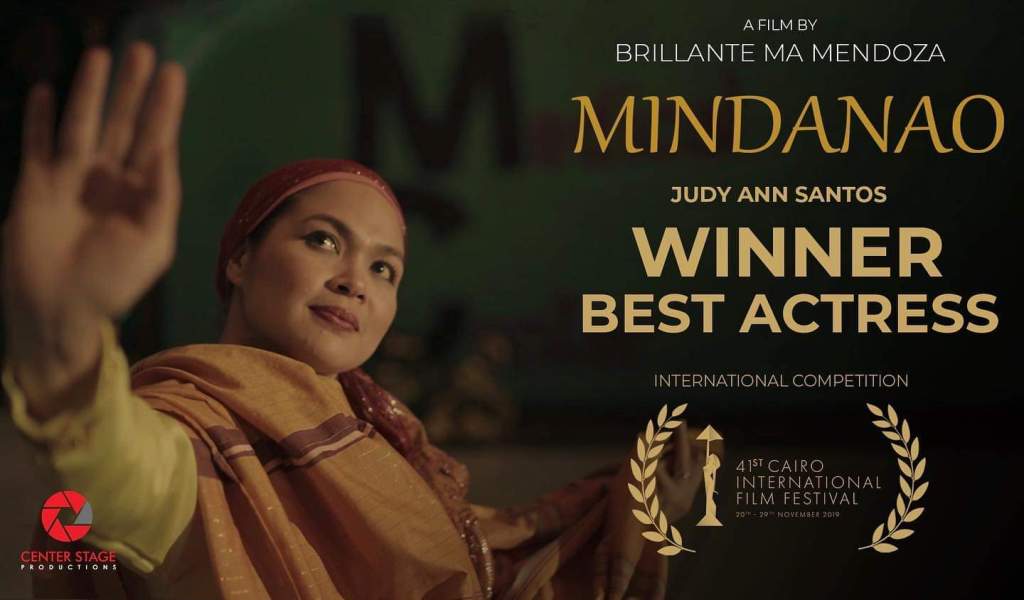
And if it’s additional encouragement, the film has been recognized and awarded in international film festivals. Need we repeat that it won Best Actress Award for Judy Ann Santos and Best Artistic Contribution for Team Mindanao.
We encourage all to watch the films included in this year’s Metro Manila Film Festival. It is Christmas season, and let us choose what type of films please us most, and in what order we should watch them. Do you want to cry first and laugh later, or laugh now and cry afterwards?


 One Philippines Filmmakers